CINQUE TERRE — MAY 9, 2026
Every so often things come together perfectly — weather, location, companions, timing — and a magnificent travel day is the result. So it was with our day in Cinque Terre. We couldn’t have asked for a better experience.
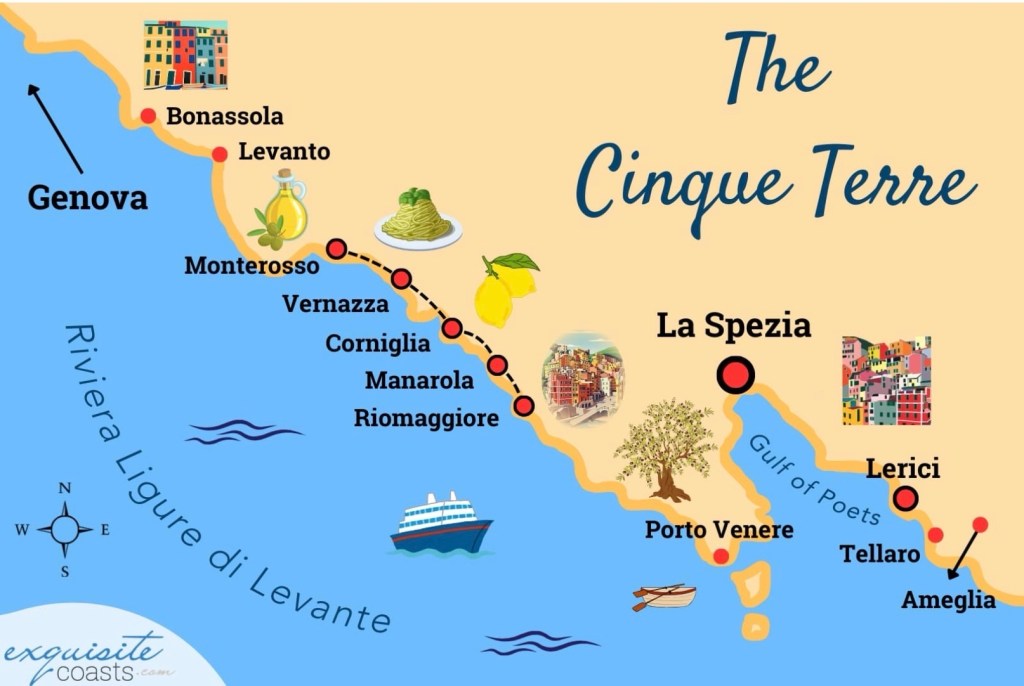
Cinque Terre (which means five lands) is a series of five seaside villages built on the steep hillsides lining the Italian coast. The villages, the coastline, and the surrounding land now form the Cinque Terre National Park and are a major tourist attraction. The villages are connected by ferry, train, or hiking path. Cars can only reach the area with great difficulty, parking is scarce, and there is little to no vehicle traffic in the villages.
The early residents of the area were farmers, and the land around each village was originally used primarily for growing grapes and olives. You can still see evidence of that today in the terraced land stretching down the hillsides. Interestingly enough, fishing was not a primary industry even though the villages of Cinque Terre are now thought of as fishing villages. Only Monterosso al Mare had an established fishing tradition, and in the remaining villages fishing was only for local sustenance.
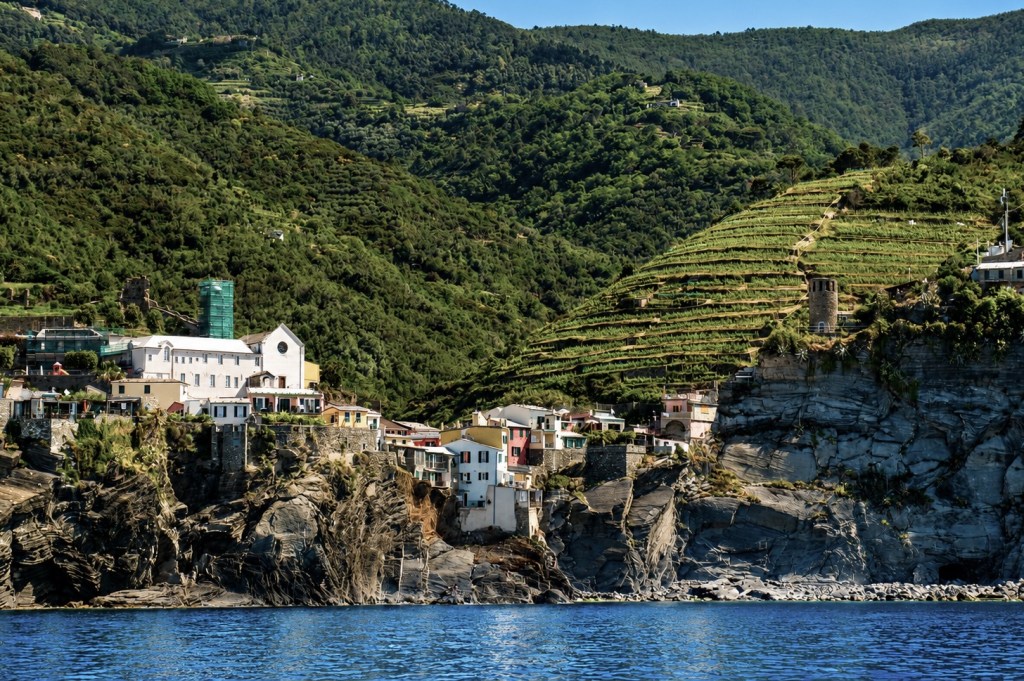
The brightly colored houses that attract so many tourists are a fairly recent development. Until the 1970’s most of the houses were natural colors, with a few brightly colored houses here and there so fishermen could spot their home from the sea. The painting of all the homes started as an effort to attract tourists. I’d say it worked! Today the color of each home is regulated by the National Park. Although a homeowner can’t be forced to repaint or make repairs if their home falls into disrepair, once they begin a renovation project their paint choice will be made for them!
Our day in Cinque Terre began when we met our guide outside the cruise terminal about 8:15. Even though we could have done this trip by ourselves, our day was much richer and more stress-free touring with someone who knew the history of the area as well as the ins and outs of travel in the region.
I booked our tour through LivTours and Filippo Coari was our guide. What a fantastic tour he gave us! Filippo works as a contractor for several travel/tour providers, and also has his own business. I highly recommend Filippo! Here’s his contact information:
We walked from the cruise terminal to the ferry dock. Here’s where having a guide really paid off…Filippo knew how early we needed to be there to be first in line to get on the first ferry of the day, and he knew exactly where we needed to sit once we were on the boat. We grabbed our prime viewing seats upstairs in the back corner, and we were off!
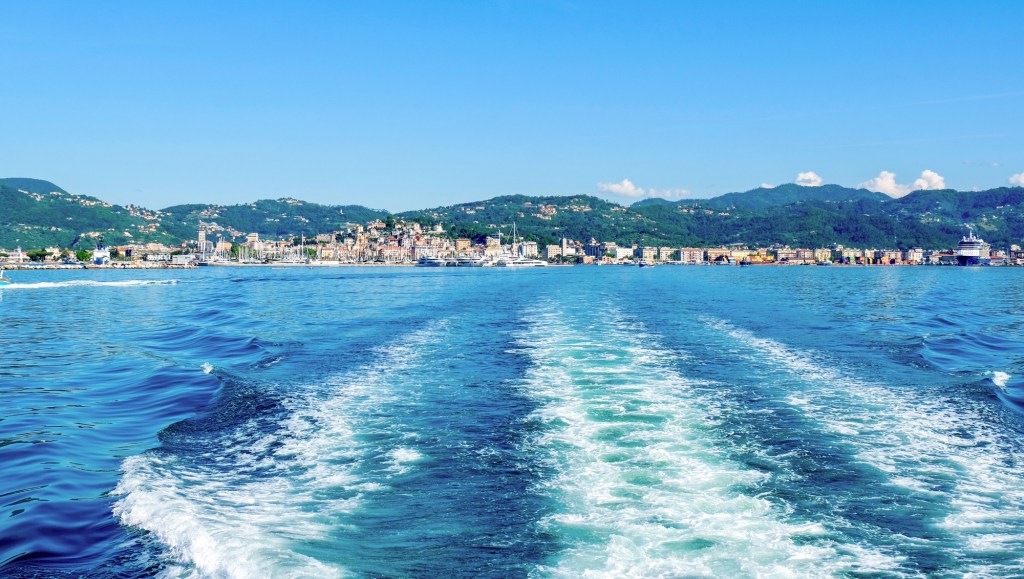
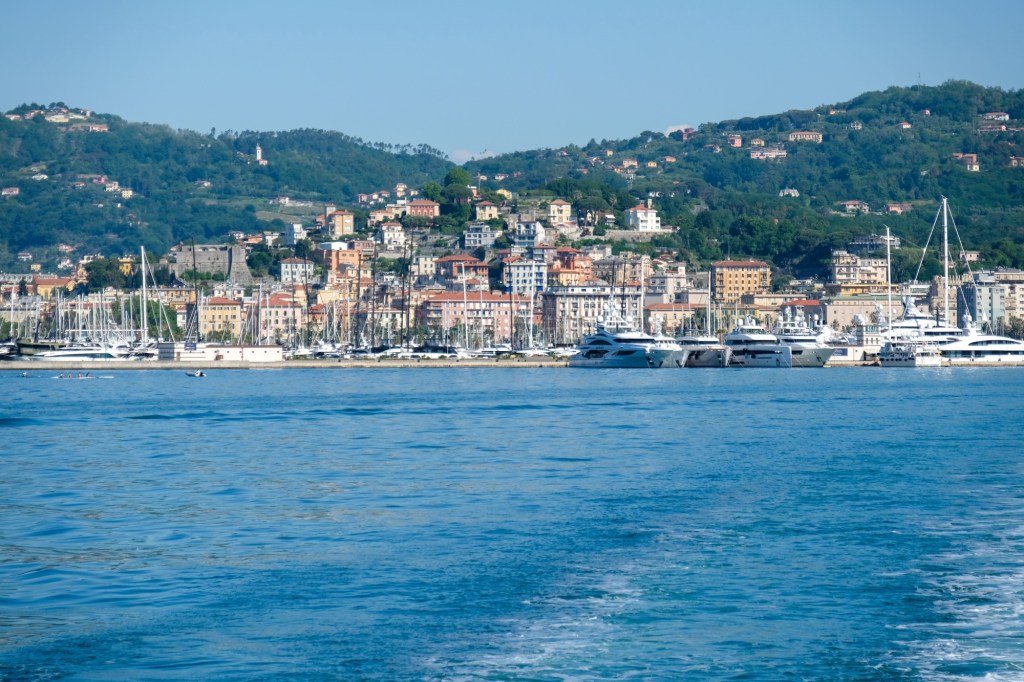
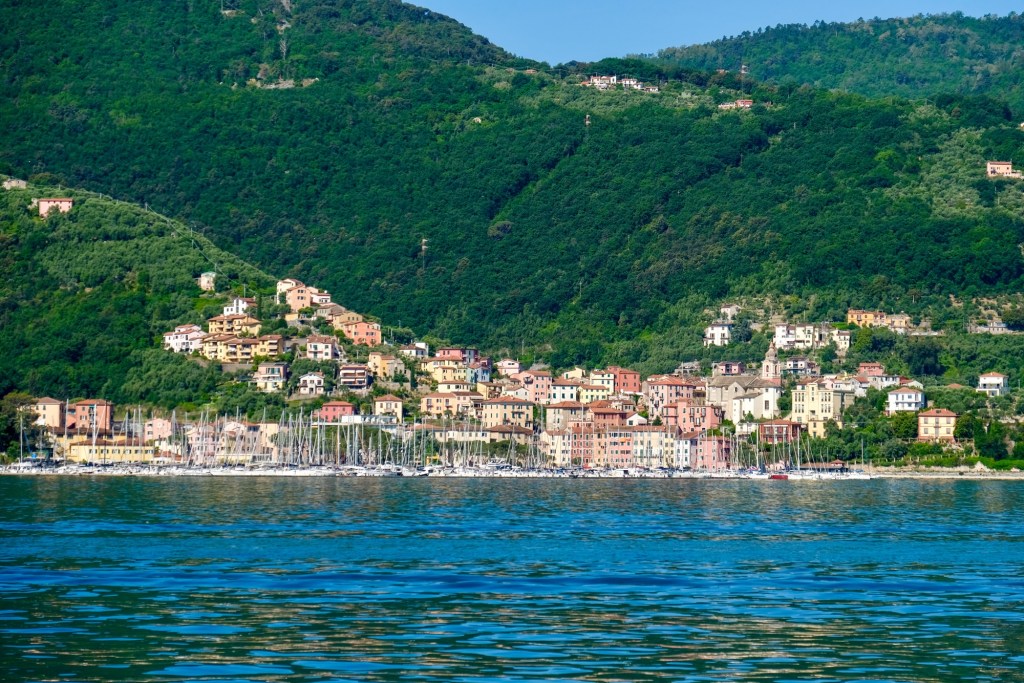
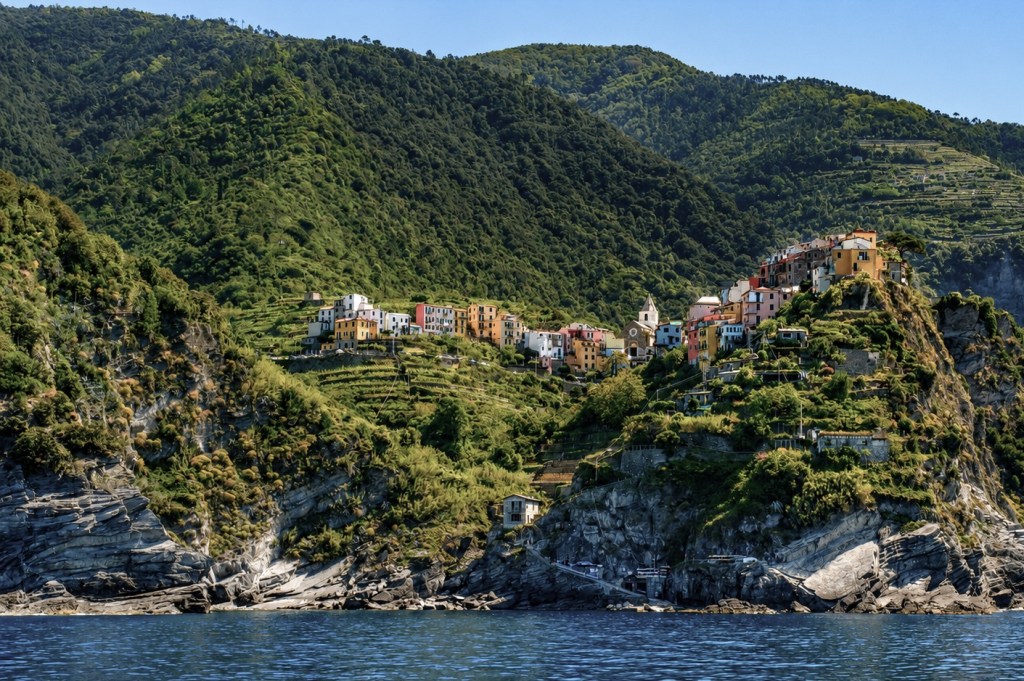
The ferry makes five stops on the two plus hour journey to Monterosso — the first is in Porto Venere, and then four of the five villages. The ferry doesn’t stop in Corniglia since the village is built high up on a hill and there is no pier.
Porto Venere is not part of Cinque Terre but is often referred to as the sixth village because of its location along the same coast. Porto Venere is older than any of the five villages, and is a beautiful town in its own right.
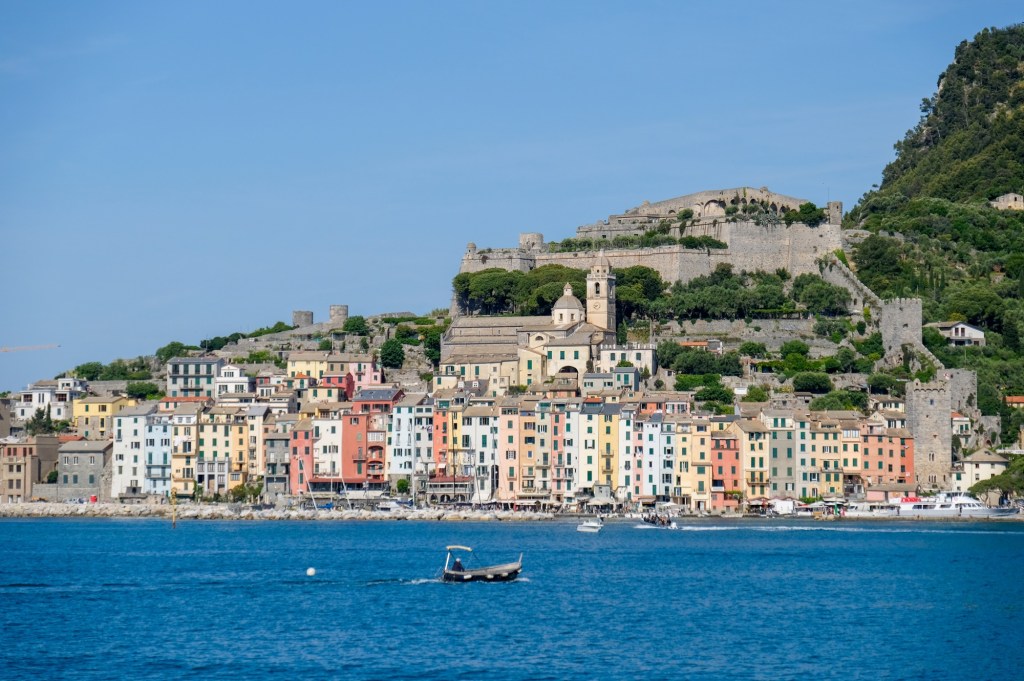
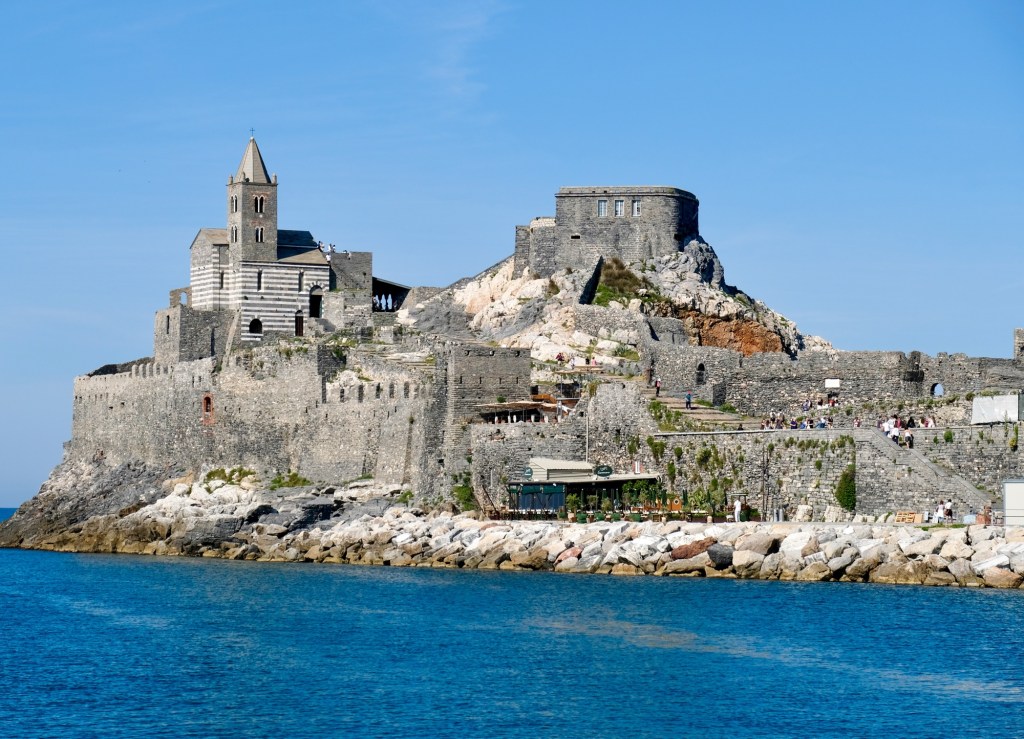
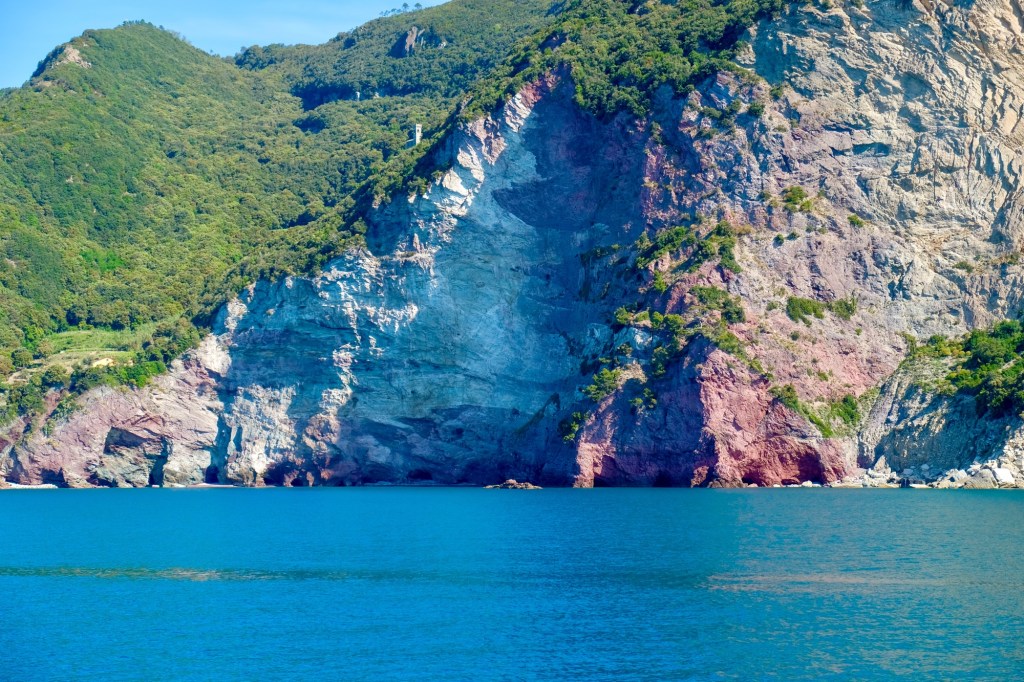
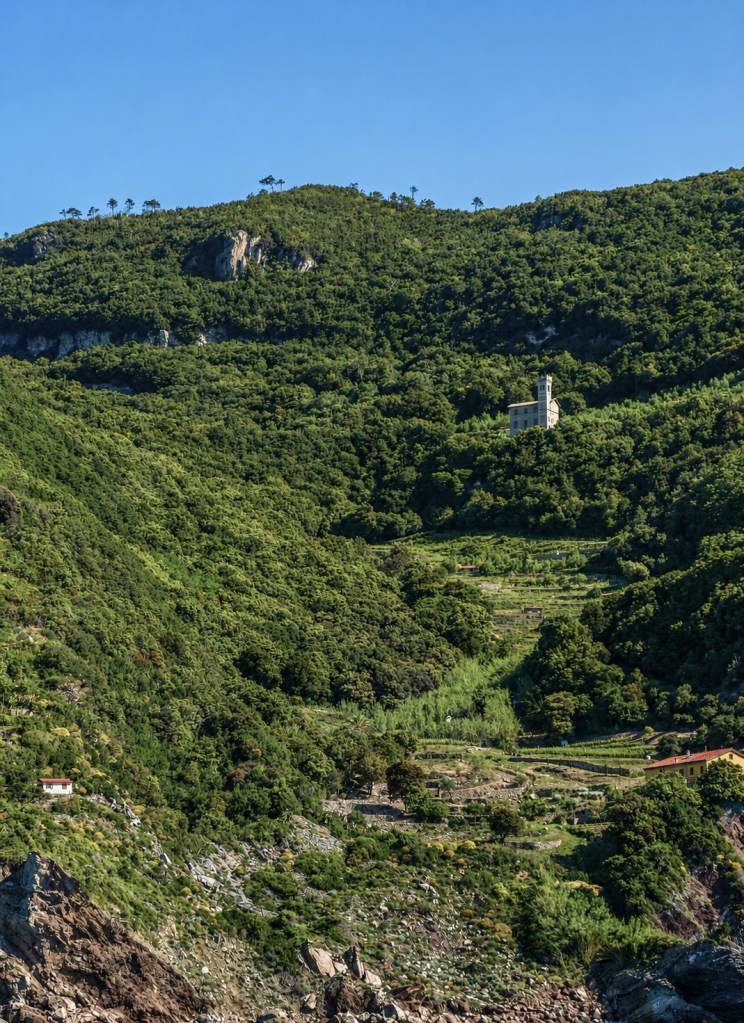
After we left Porto Venere we stopped at or passed by each of the villages as we made our way up the coast. Each village has its own unique features and history, and Filippo shared his knowledge. We also considered our options and formulated a plan for the rest of the day. We decided to go all the way to Monterosso on the ferry, then travel back by train stopping at one or two of the other towns. We settled on Vernazza and either Riomaggiore or Manarola, depending on how my ankle felt near the end of the day. Riomaggiore would require navigating steep slopes immediately after exiting the train station, whereas access to Manarola would be relatively flat. We ruled out Corniglia. It looked charming, but there are almost 400 switchback stairs between the train station and the village and that seemed like something I probably didn’t want to attempt yet! Little did I know what was waiting for me in Vernazza!
Once decisions had been made, the rest of the journey was spent viewing the Cinque Terre coast and villages through my lens!
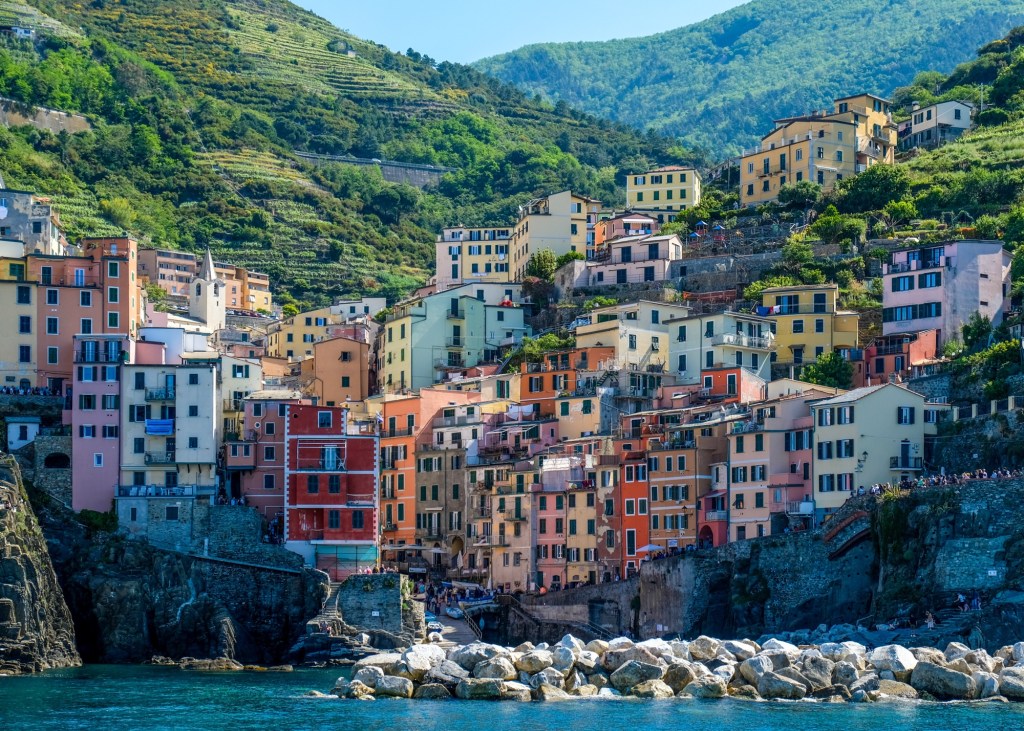
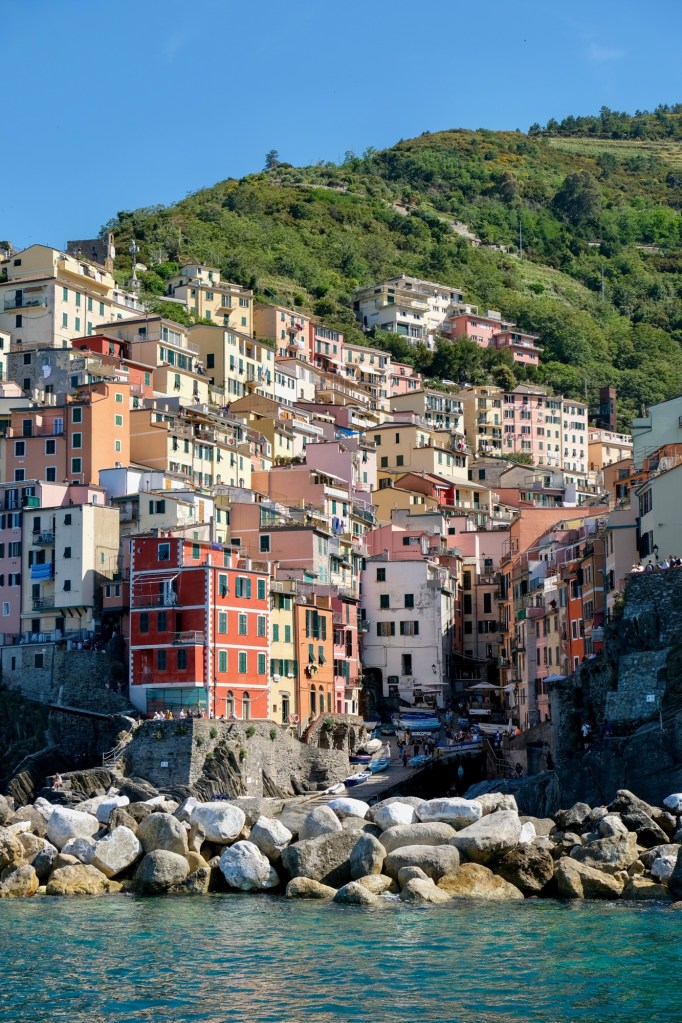
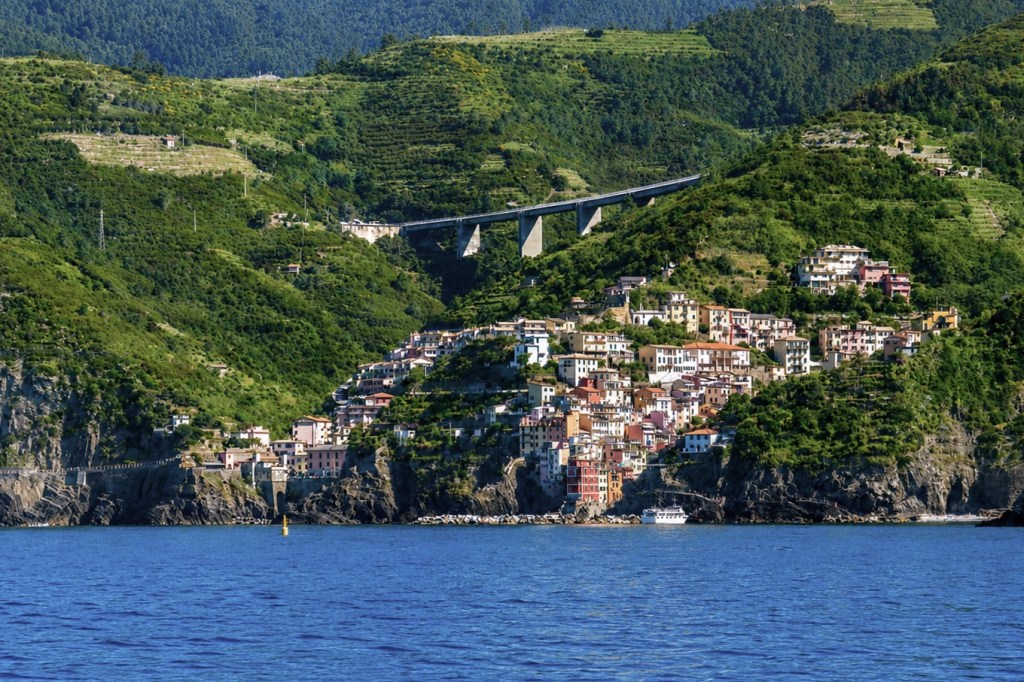
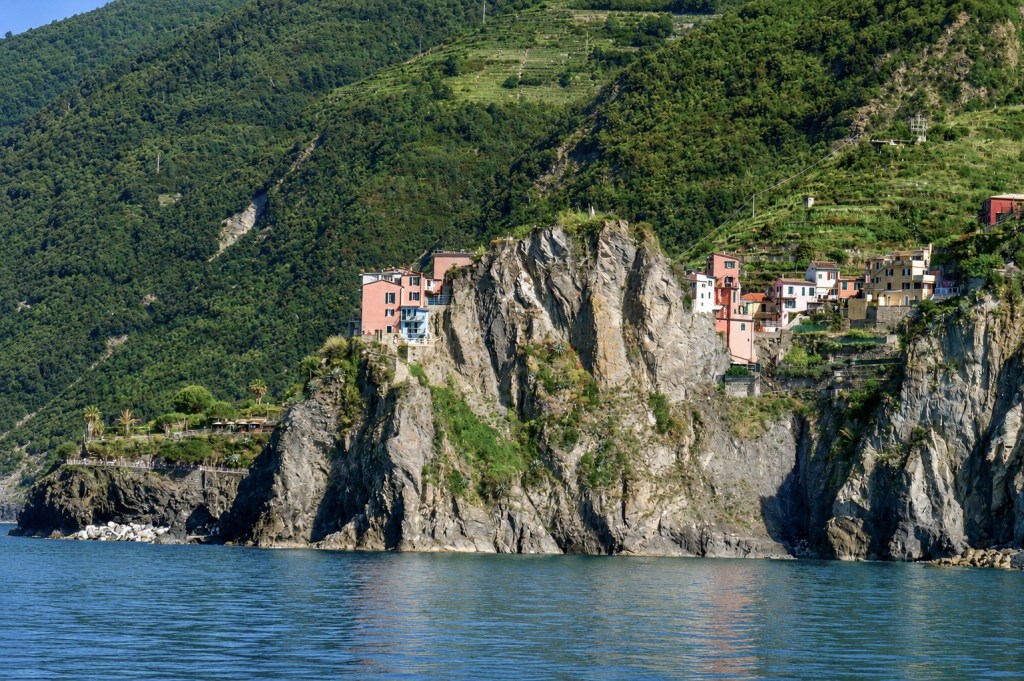
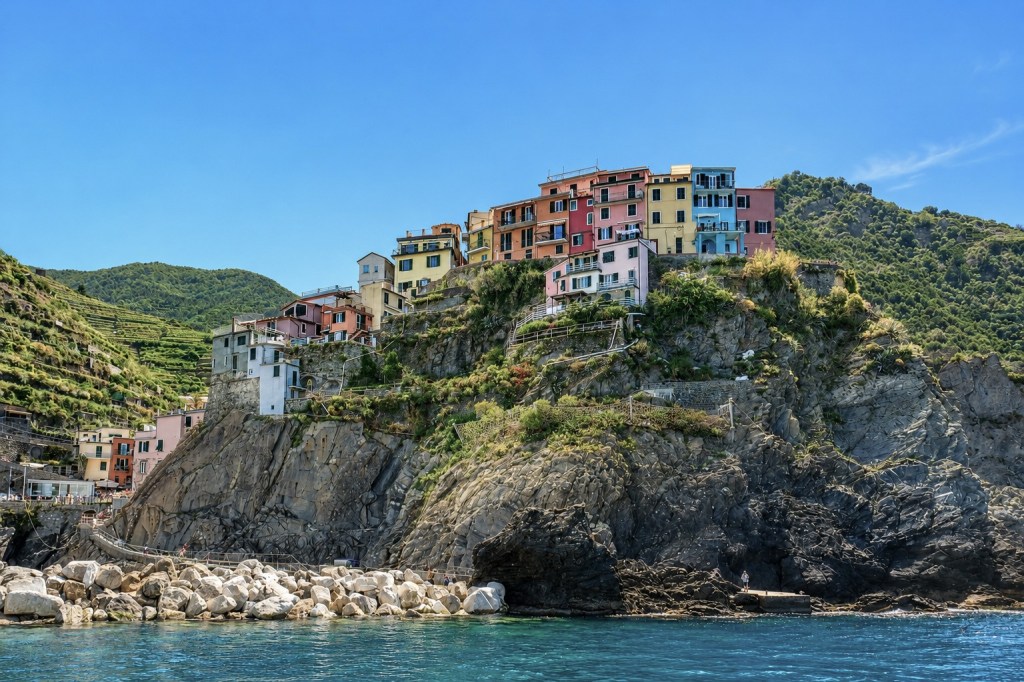
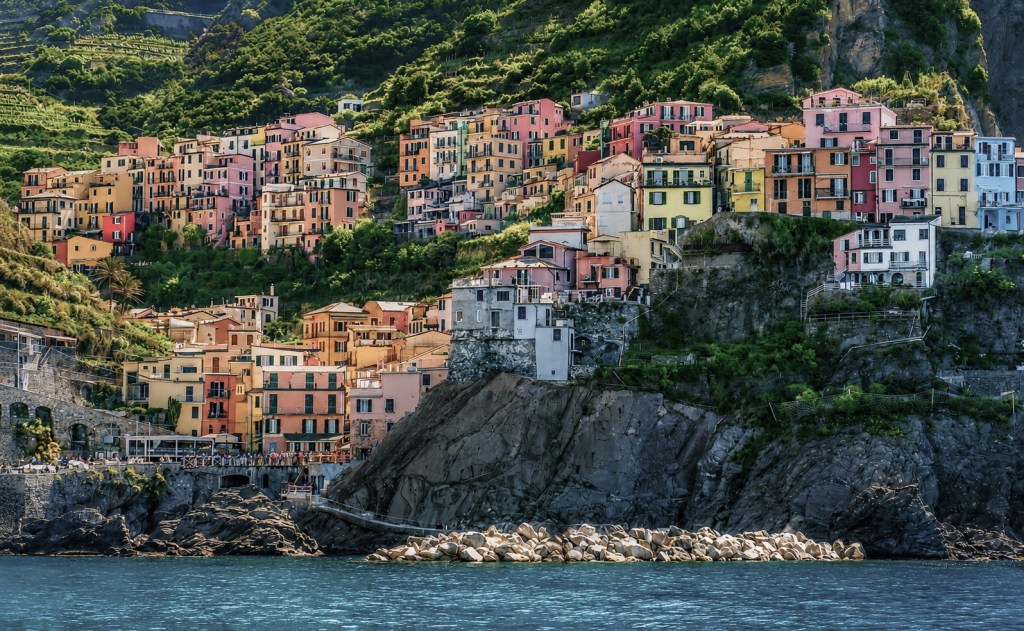
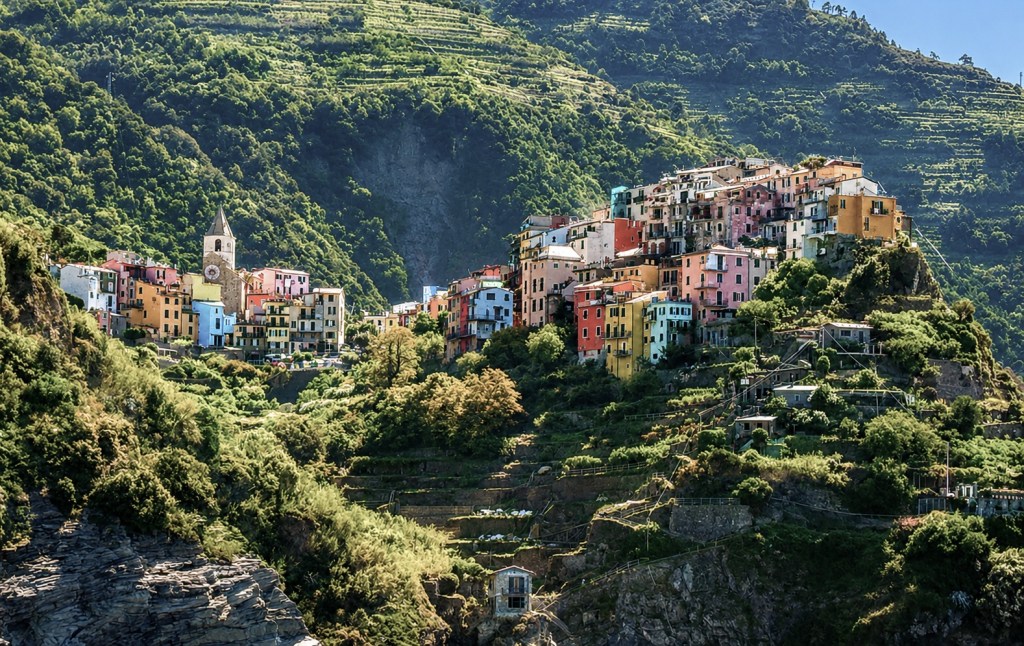
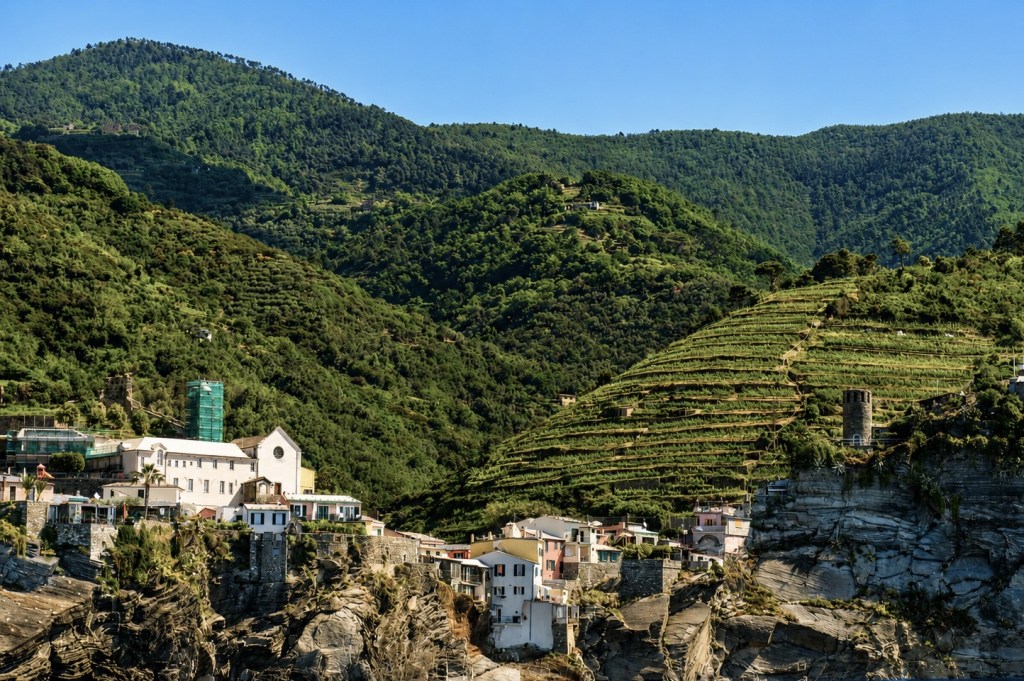
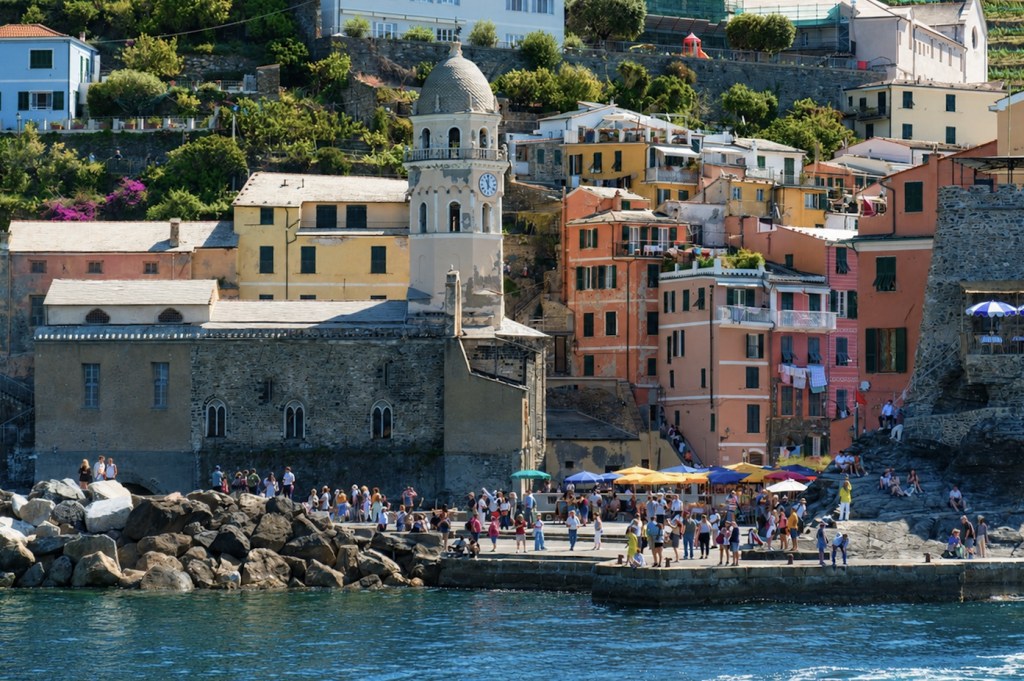
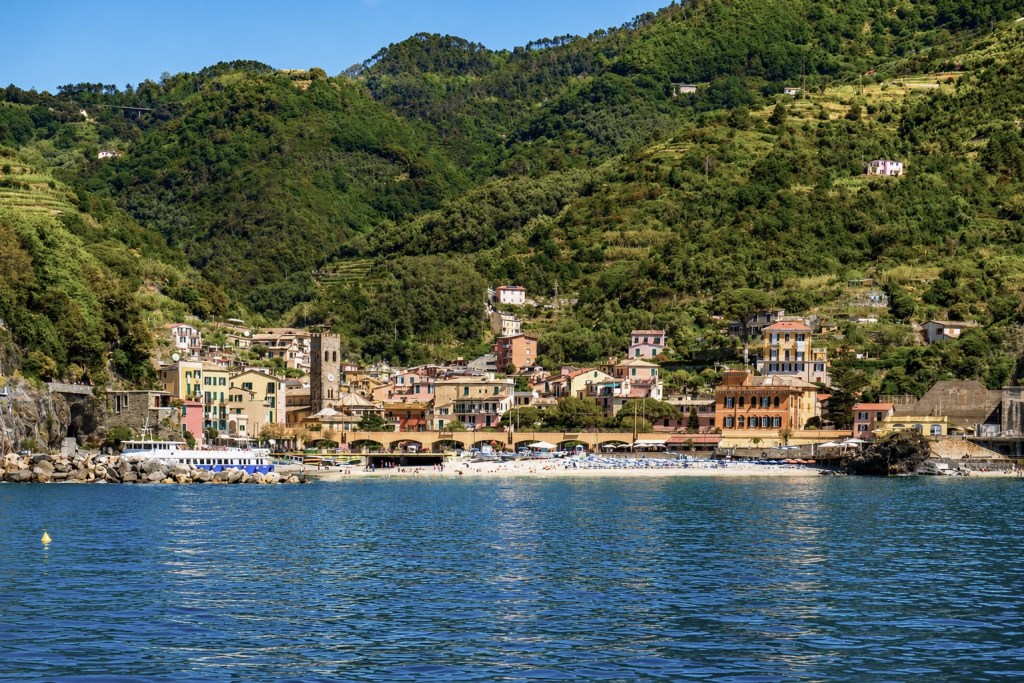
I loved every minute of the ferry ride, but I was also excited to disembark in Monterosso and start exploring.
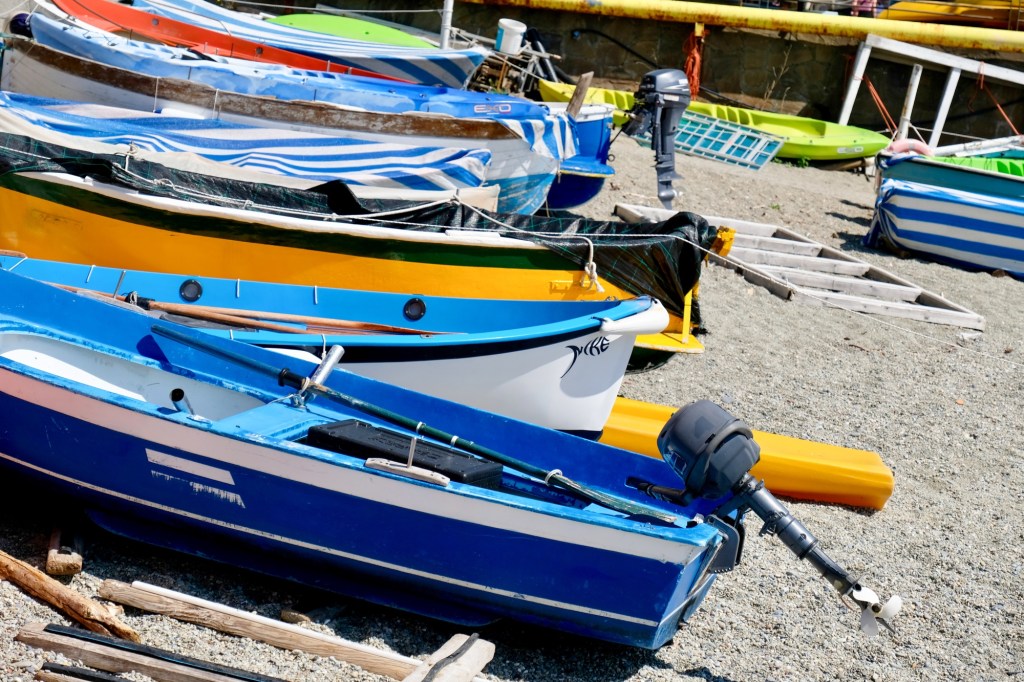
We wound our way through the narrow streets and Filippo explained how the houses would have been used “back in the day” and how they have changed over the years. Most of the homes have very large double doors at street level that were used for storage of oversized items such as wine casks. Entrance to the home would have been through a separate, smaller door or a door that was inset into the larger storage door.
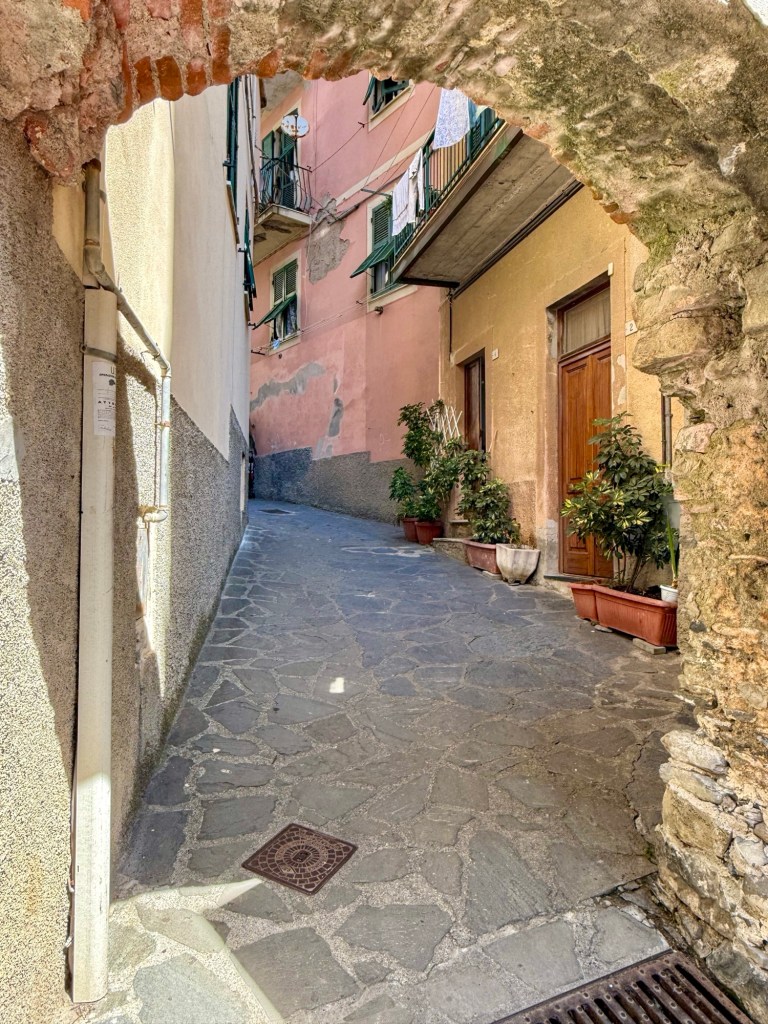
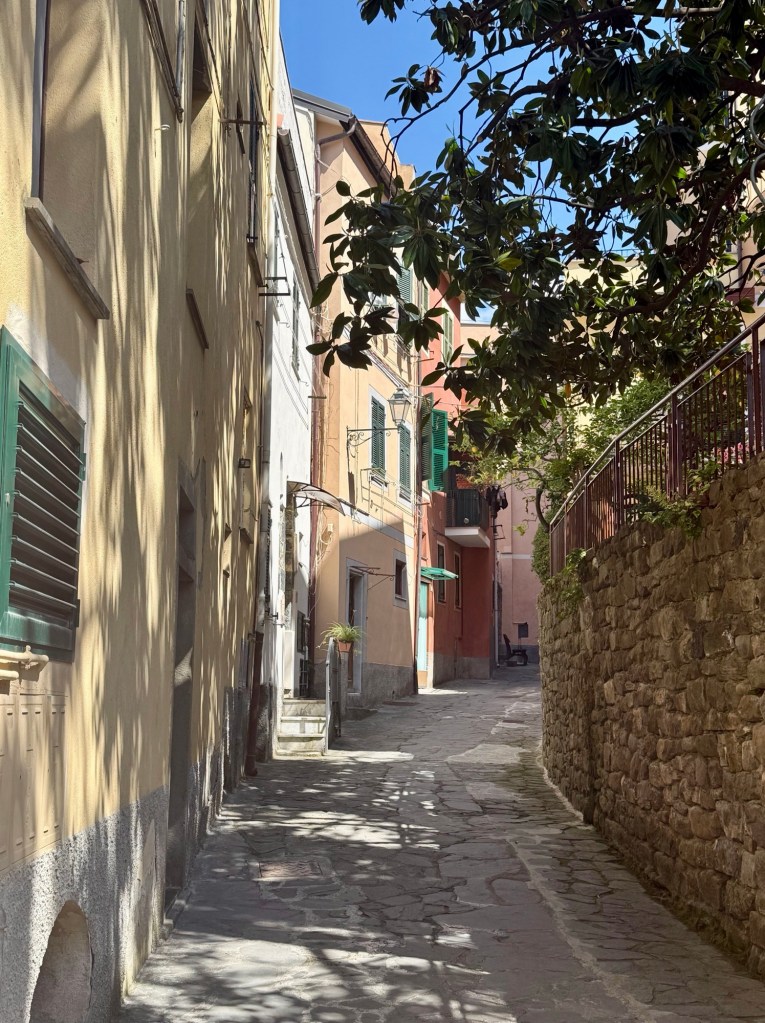
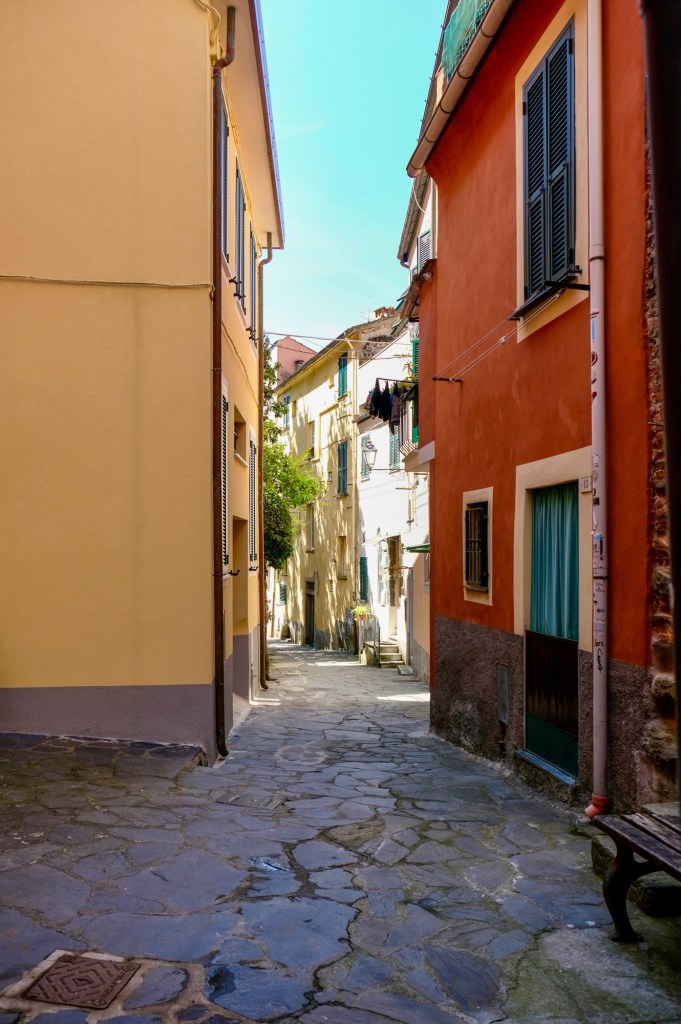
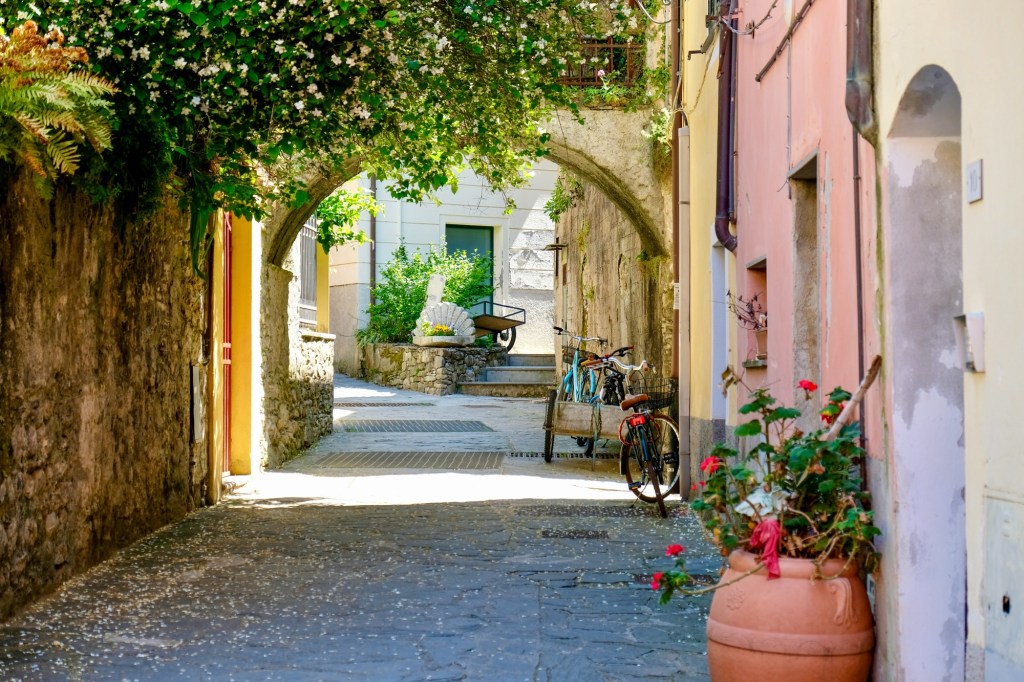
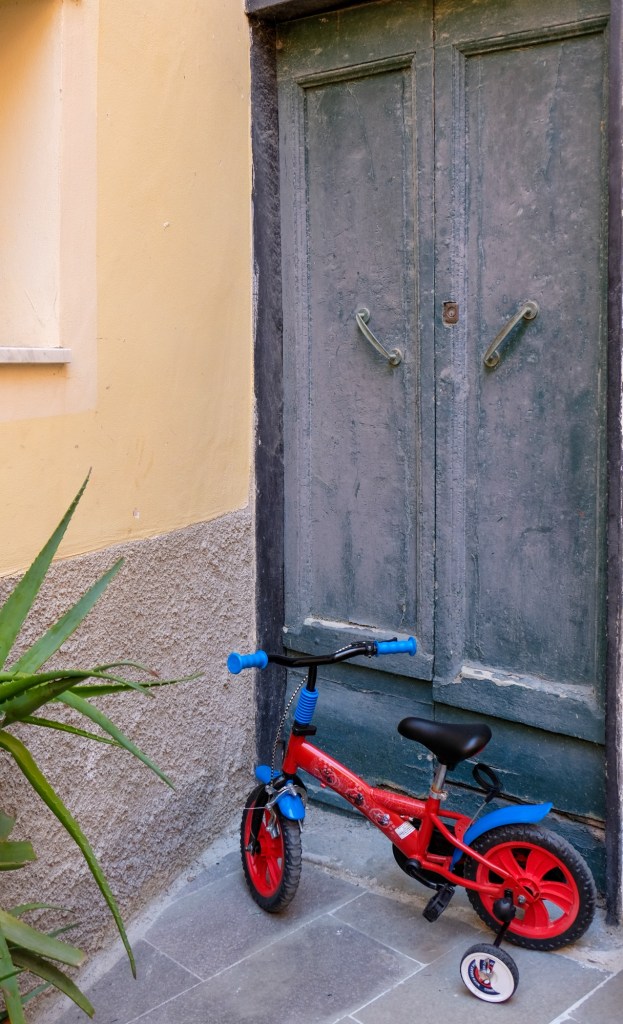
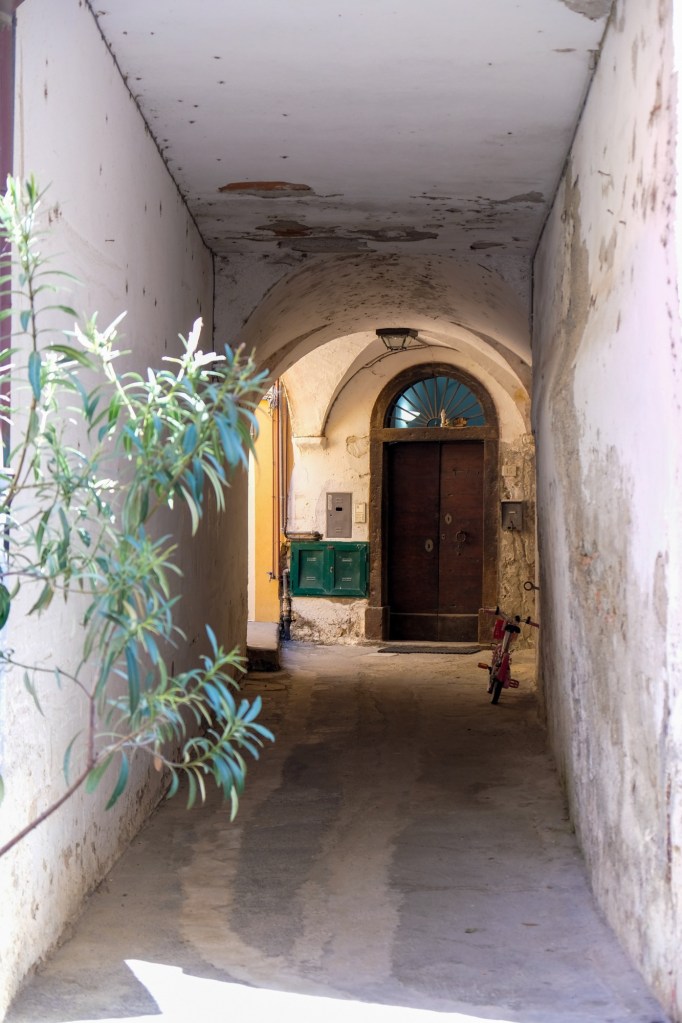
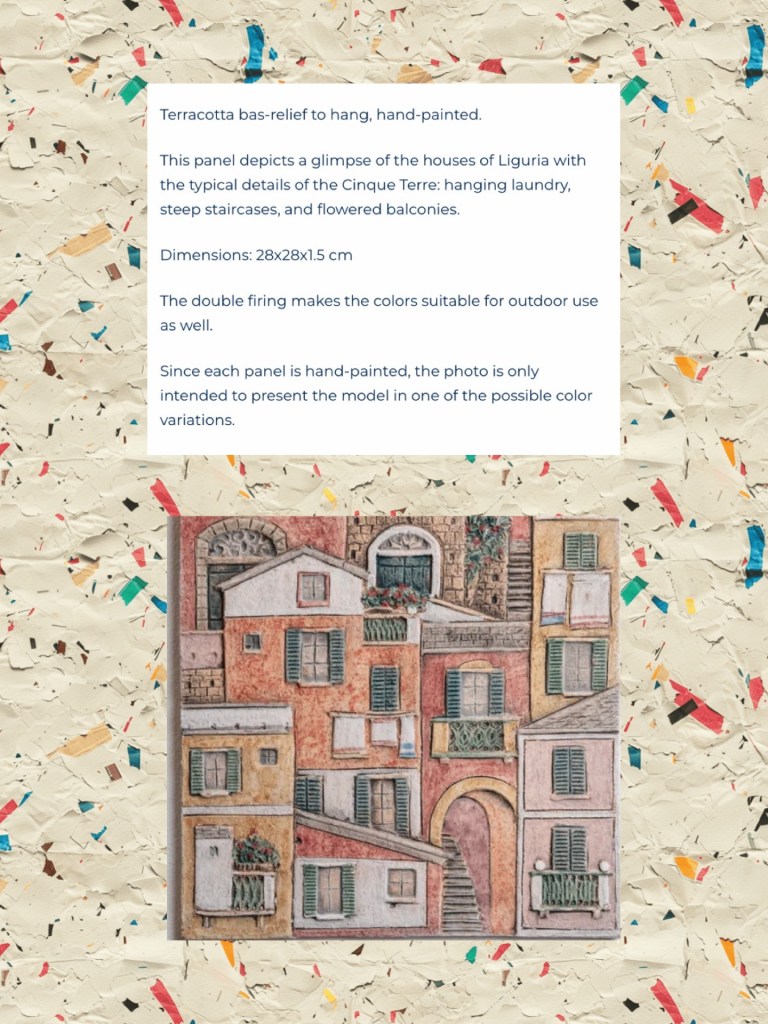
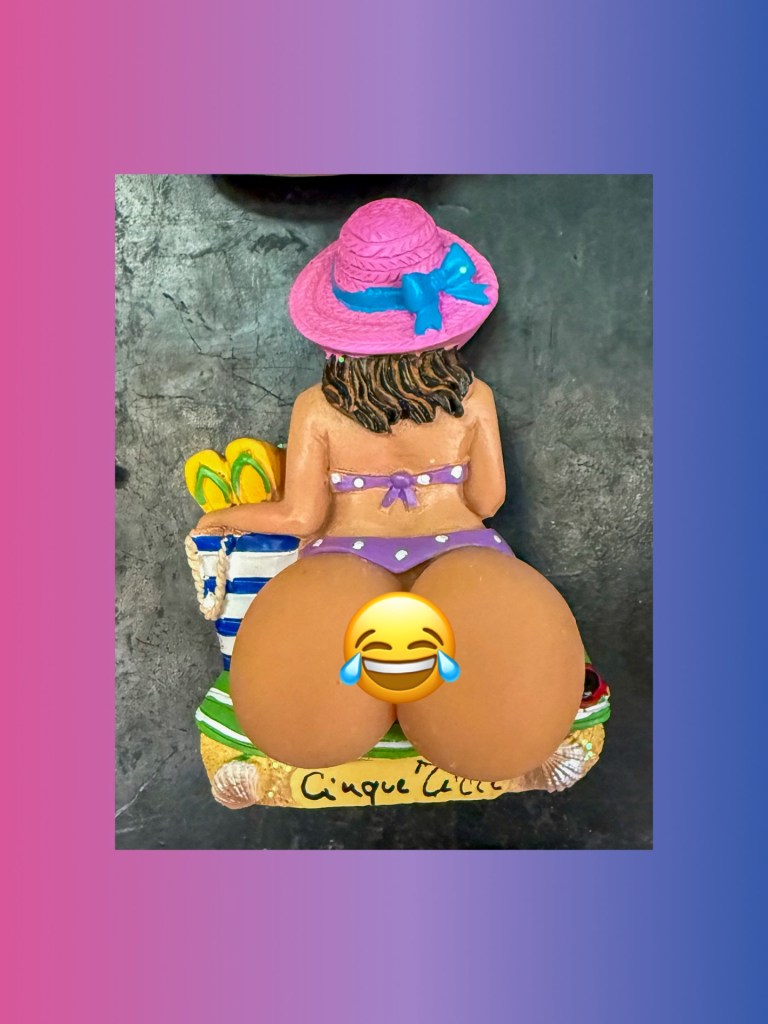
We took time to look in a few shops, and we were rewarded with a magnet, an ornament, our “nice” souvenir from the trip, and a photo of the tacky magnet of the day!😂
Lunch was at a wonderful restaurant on the hillside overlooking the beach and town. Jim was brave and tried some fried anchovies (a local favorite) based on Filippo’s recommendation. I stuck with the other favorite local dish, pesto pasta. The food was excellent, and as with every place we went everything was very fresh and grown/made locally.
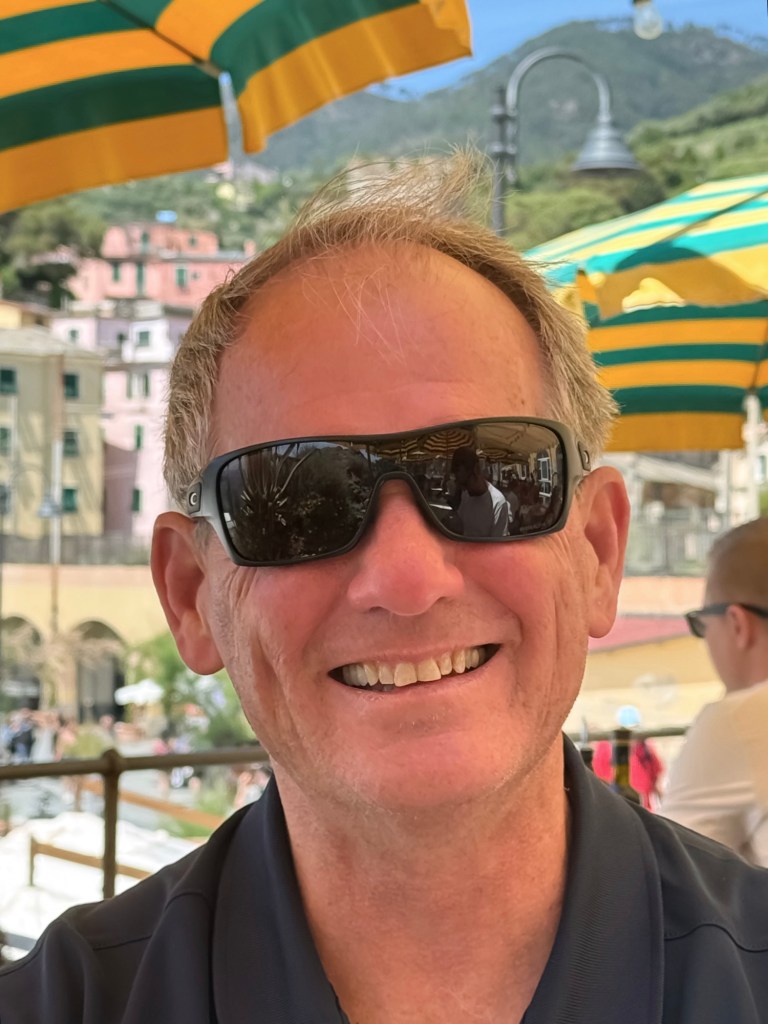
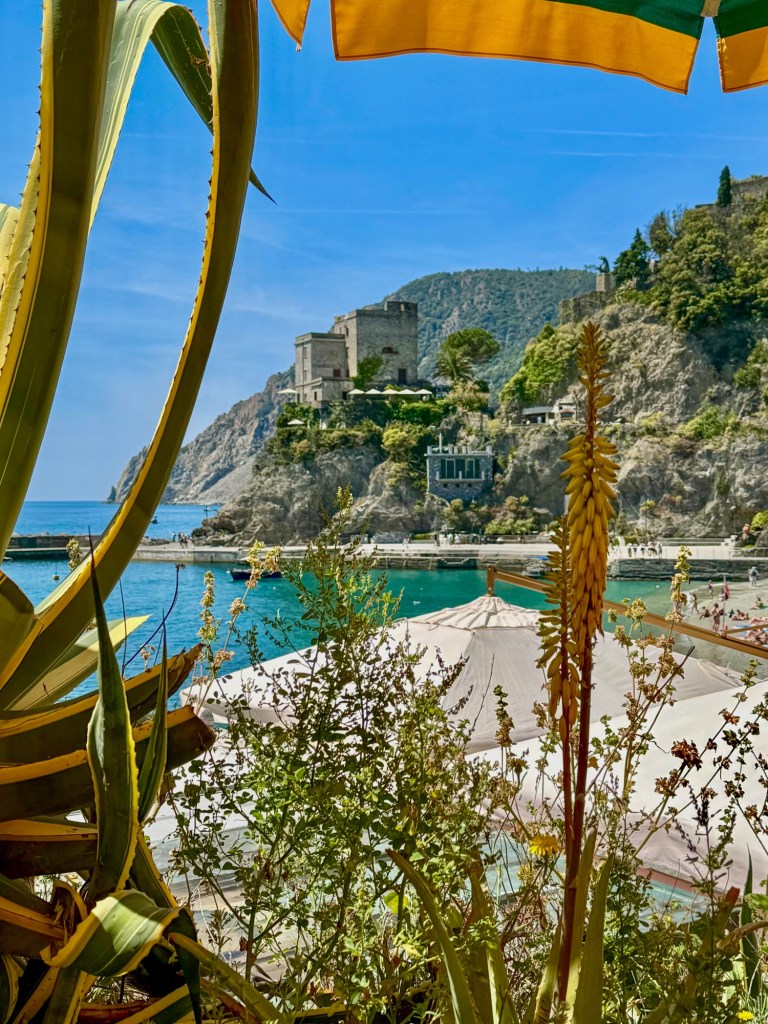
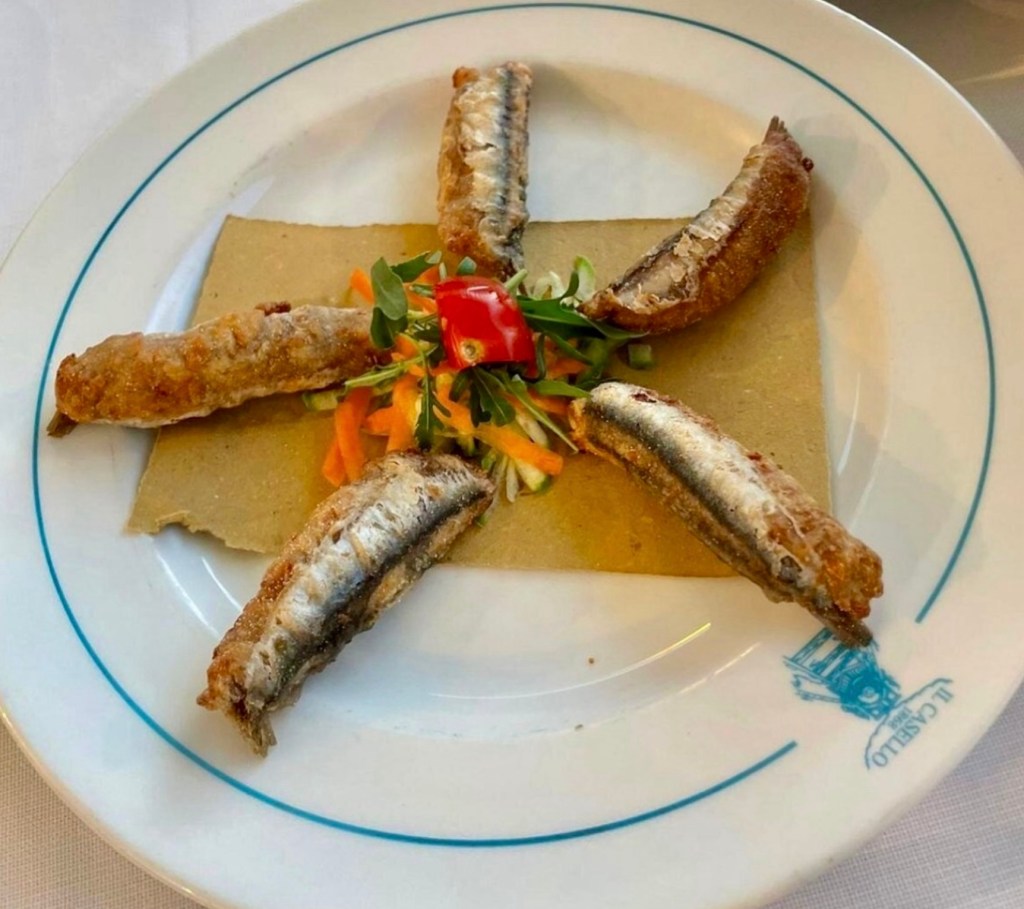
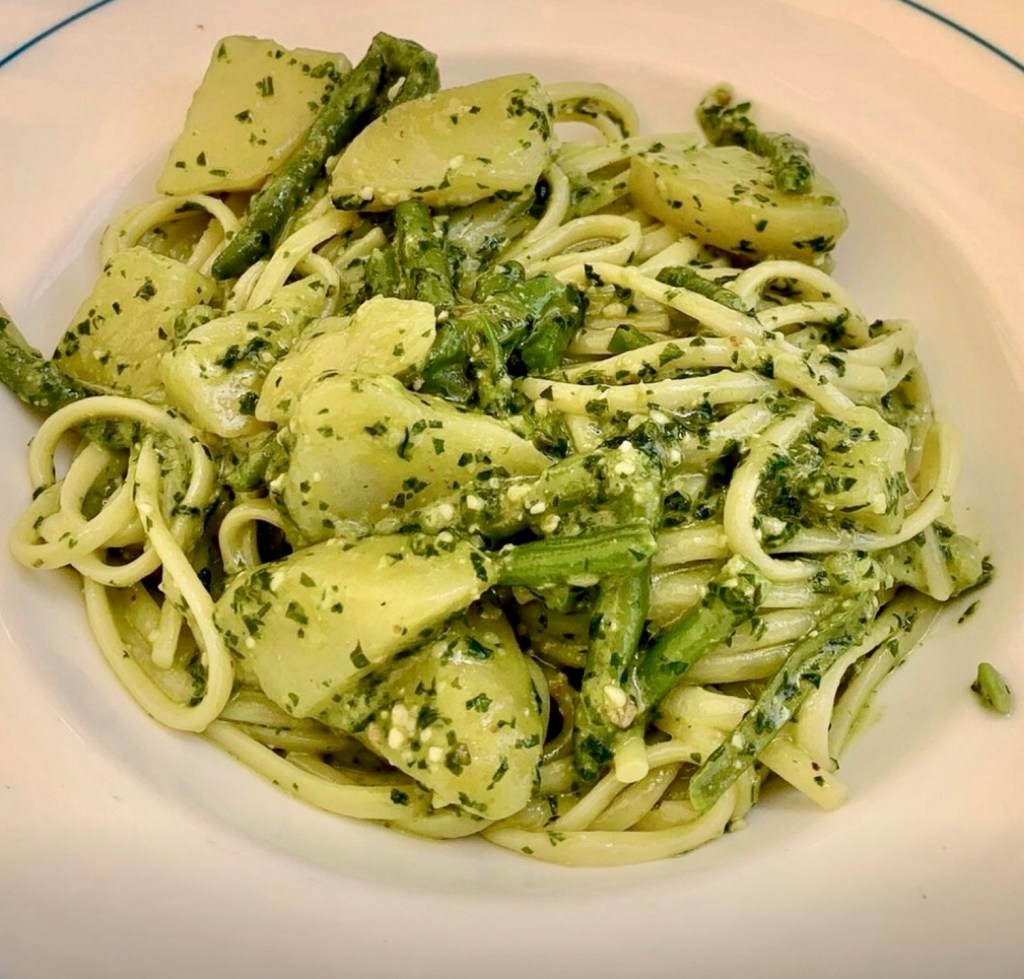
We knew we had to get moving if we wanted to see more of Cinque Terre, so we reluctantly left our table with a view and headed to the train station.
Monterosso is split by a mountain into 2 parts — the old town and the new town. The two distinct sections are connected by a tunnel, which we used to access the newer part of town where the train station is located.
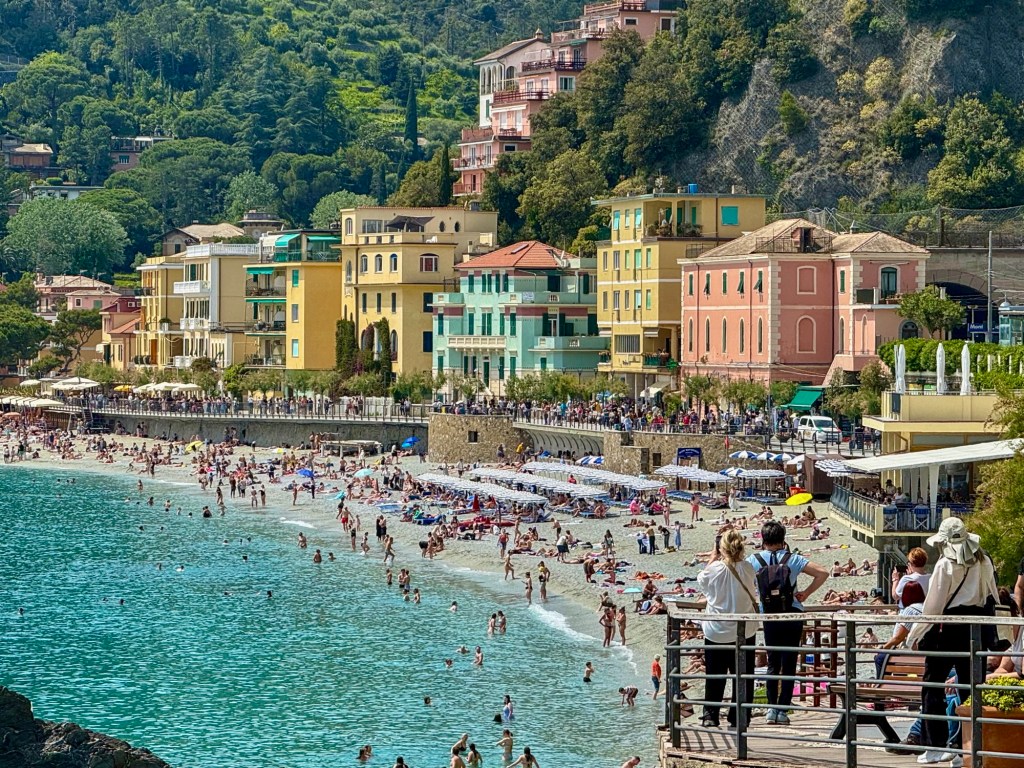
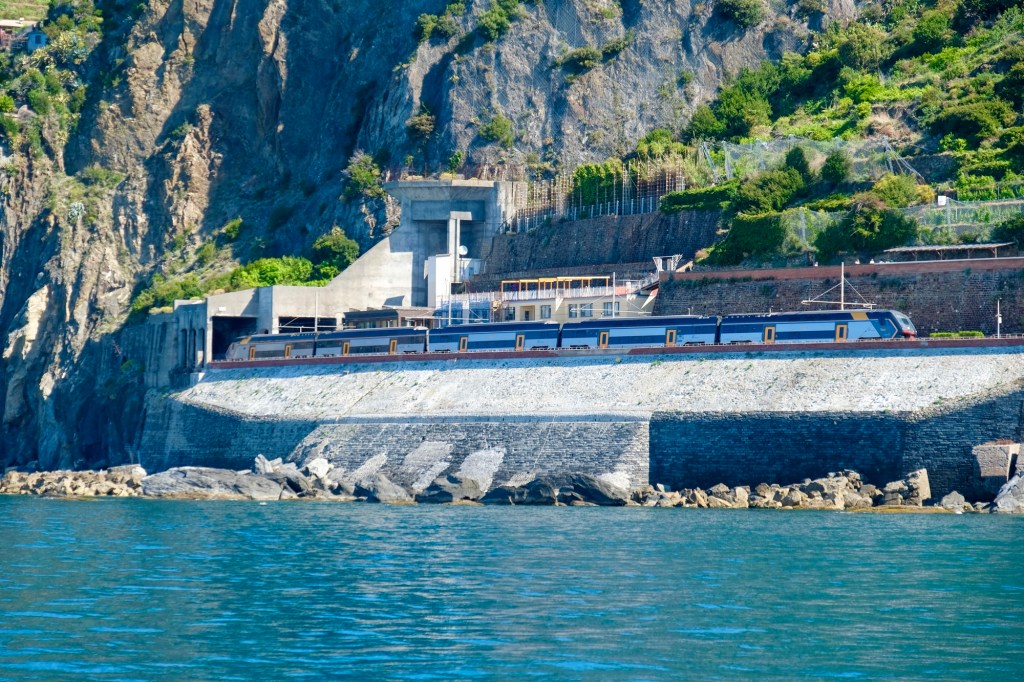
The train connecting the villages is fast and runs frequently, so we were in Vernazza in a matter of minutes. Vernazza is the most “popular” village and the one most frequently seen in photographs. It is also just as crowded as you would expect a top attraction to be.
Still, it wasn’t unmanageable, and we enjoyed walking the narrow streets and seeing the differences between Vernazza and the much larger Monterosso.
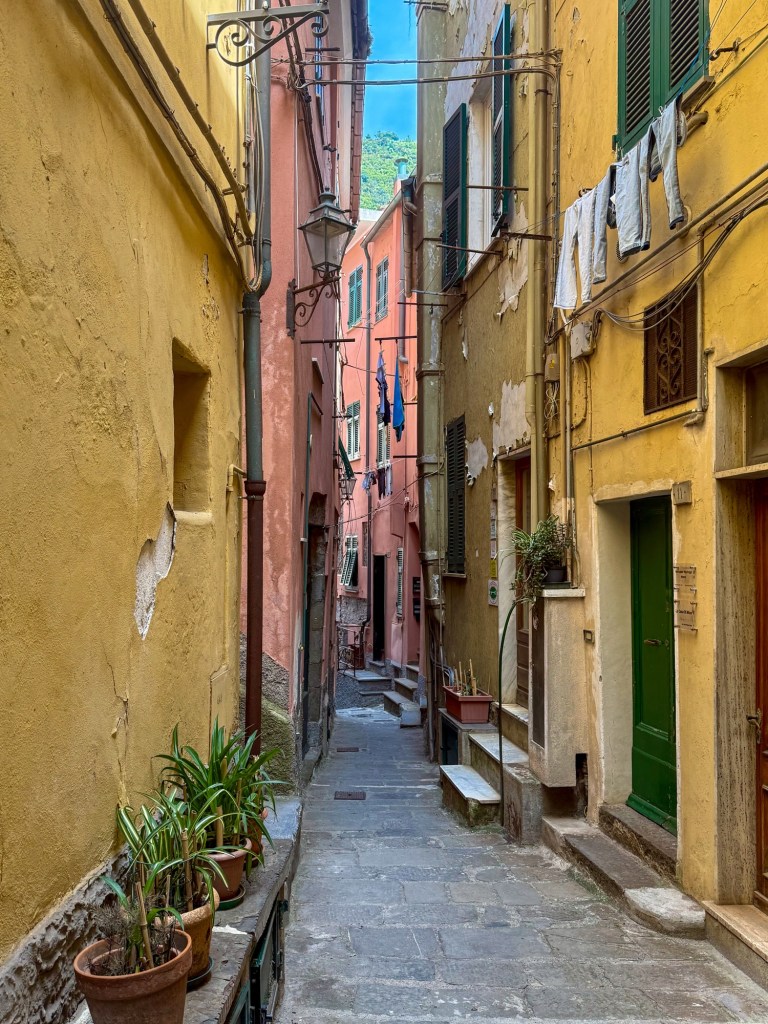
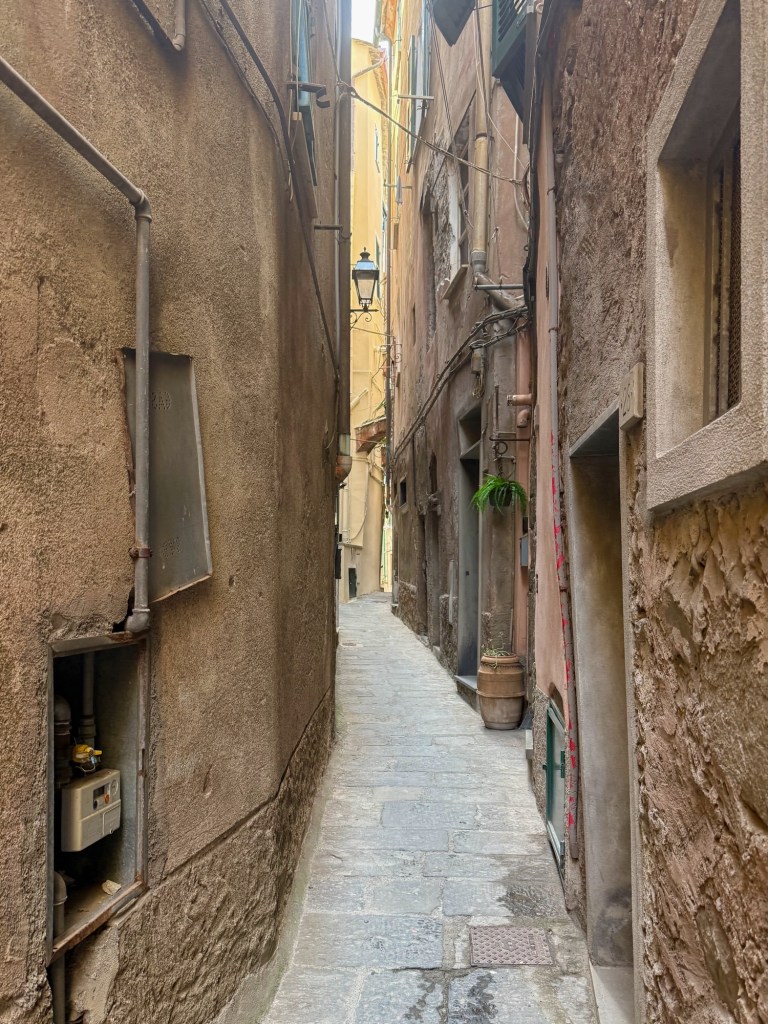
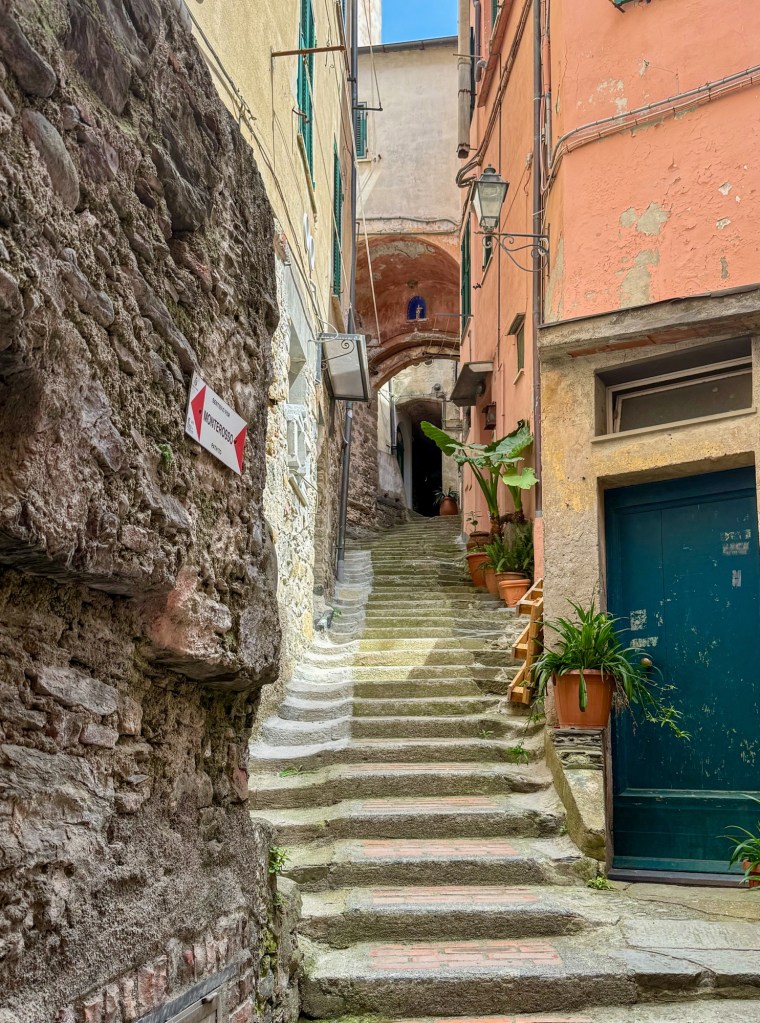
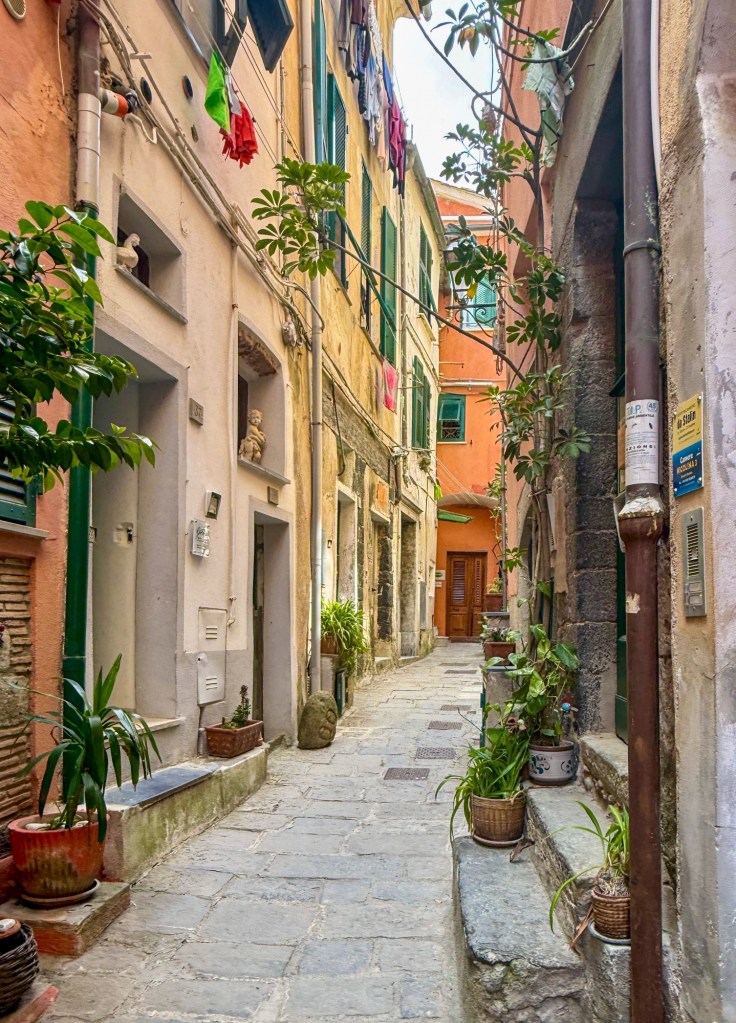
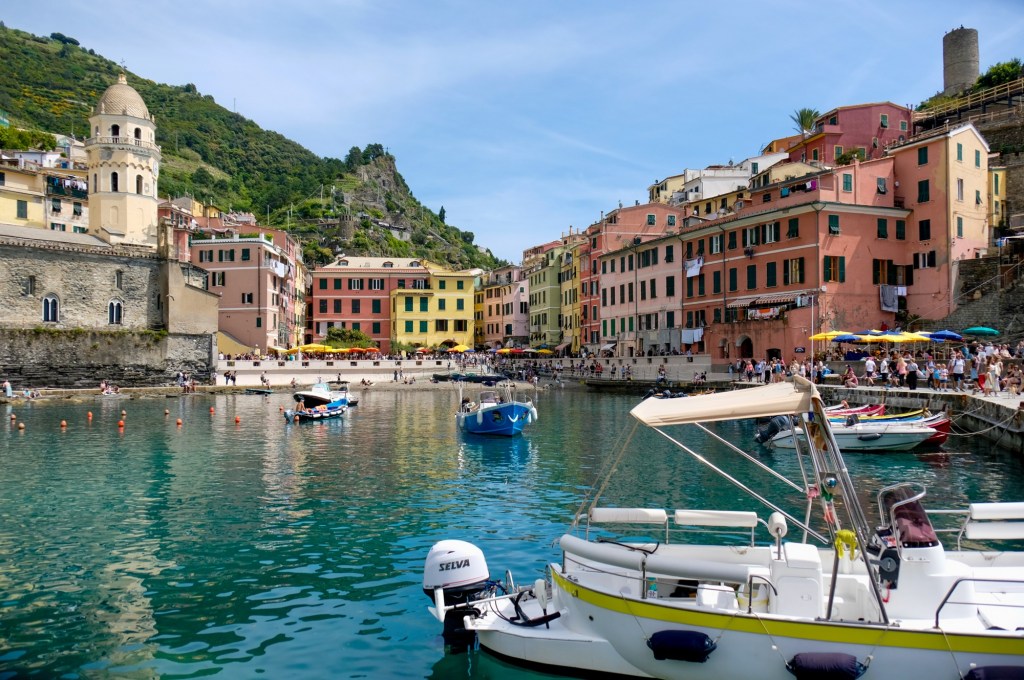
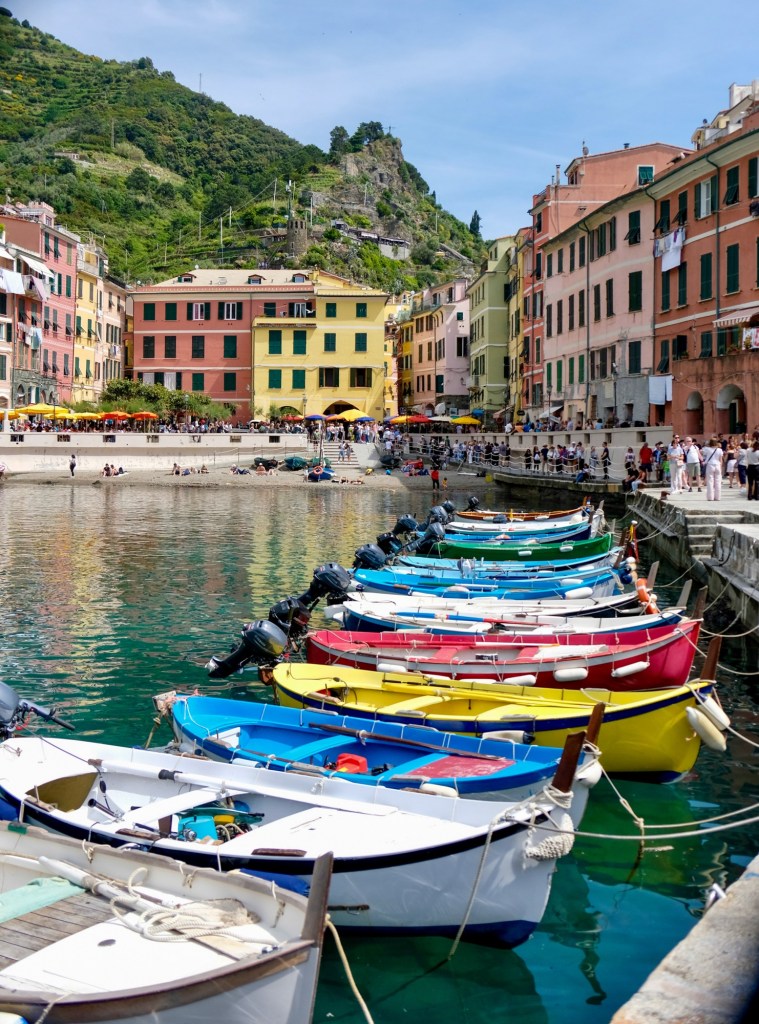
No visit to Vernazza would be complete without climbing to the lookout point above the village to see the famous views of the colorful town. This was my first real test of my ankle. We had walked a lot and I had navigated a lot of stairs, but the climb in Vernazza took things up a couple notches! According to AI (I didn’t count!🤷♀️) the climb to the panoramic viewpoint is 700-800 steep, uneven stone steps.
It was worth it!
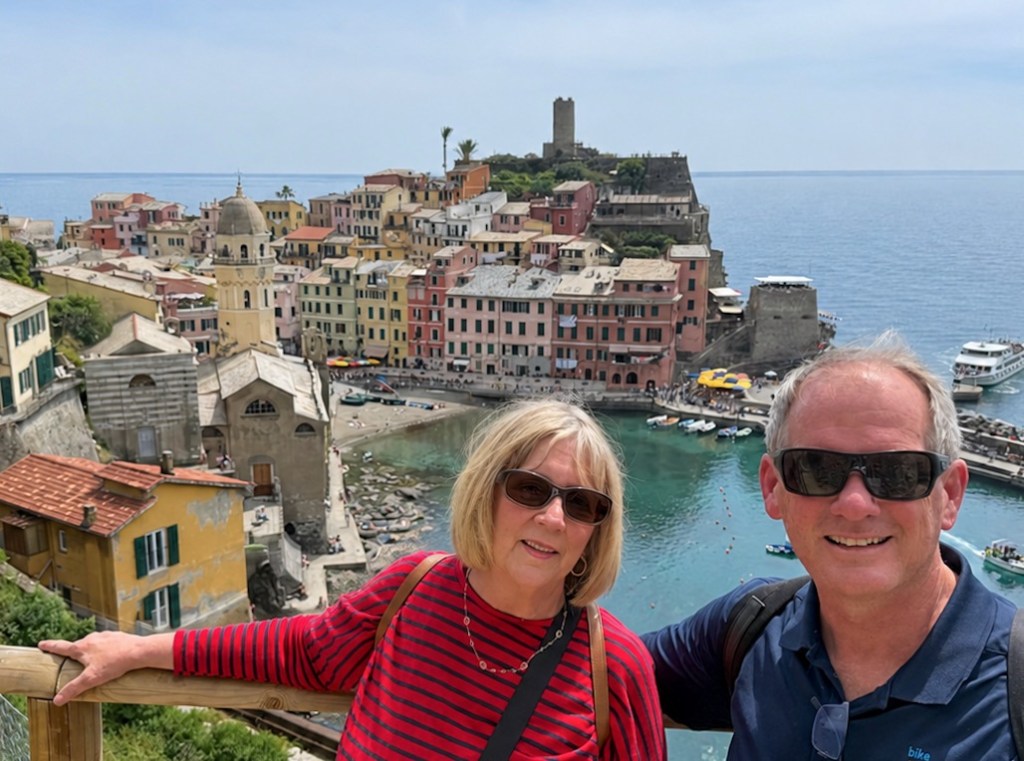
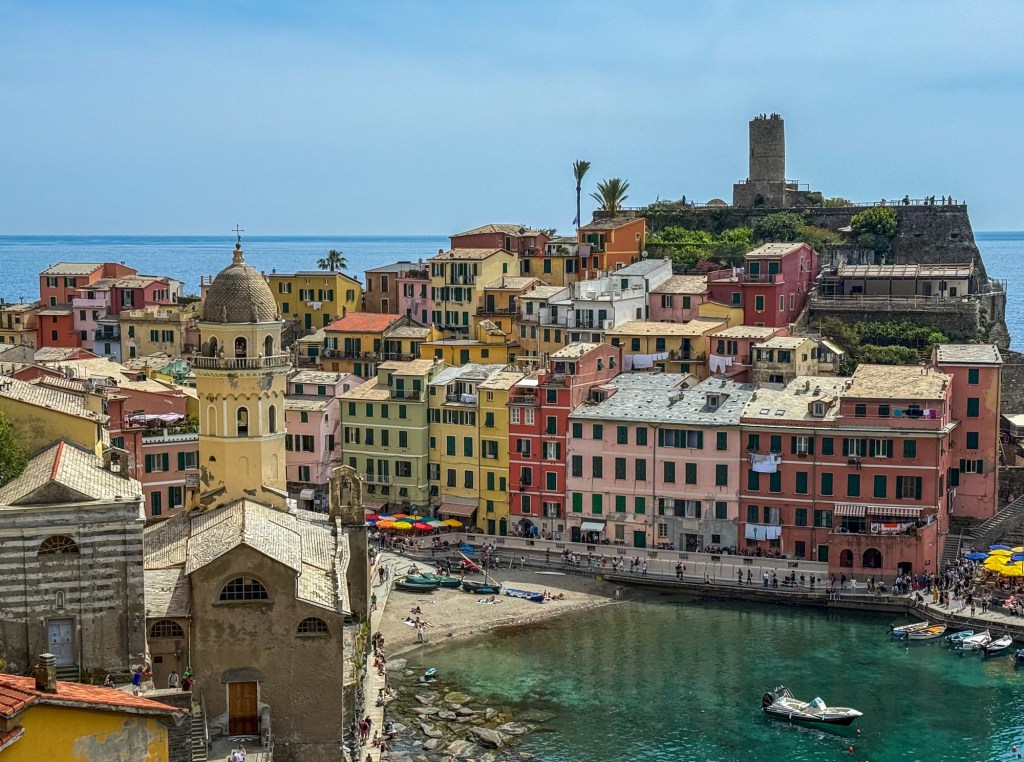
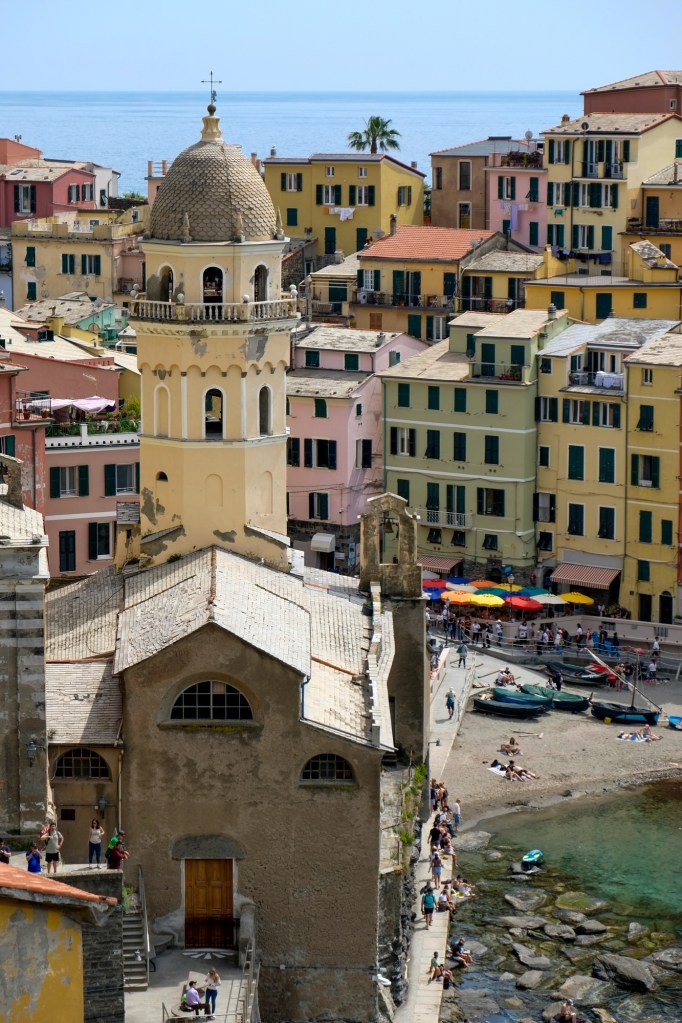
Getting down proved to be more difficult and a lot scarier than the climb. There are few handrails to be found in old European villages, and absolutely nothing resembling an ADA law! Luckily Jim and Filippo were very patient and helpful. Jim carried all the bags and Filippo held my hand on the rough parts to make sure I didn’t slip and fall.
Sadly, all good things must come to an end, and our day in Cinque Terre was no exception. We decided it was too late to try to walk around another of the villages, so we caught the train and headed back to La Spezia.
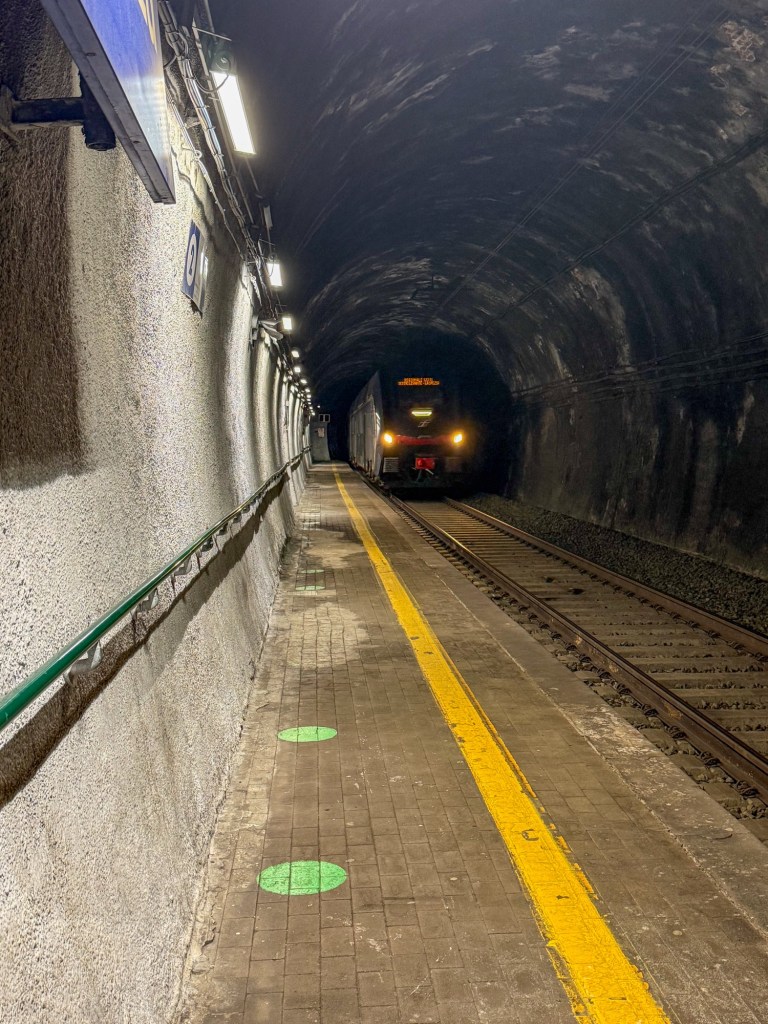
It was a day I wouldn’t go back and change even if I could. The villages of Cinque Terre were picture perfect!

